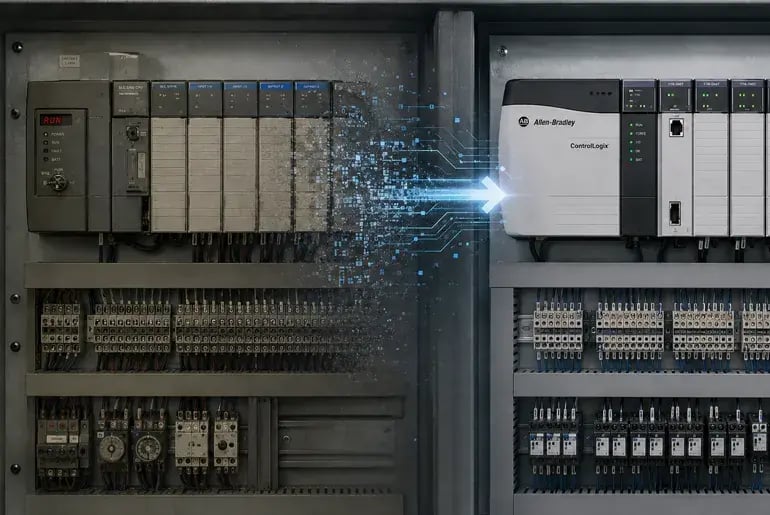
Many legacy control systems continue running long past their intended lifecycle because they still “work.” But over time, they can quietly introduce risk that’s difficult to ignore.
The machine is a major revenue center
The machine is a bottleneck to other operations
The system runs high-volume or high-value products
Support is limited due to personnel turnover or lost expertise
The control system has become a “black box”
Any one of these factors can make a control system upgrade feel intimidating. In reality, modernization often becomes unavoidable due to obsolete parts, missing documentation, unsupported platforms, or the increasing risk of unplanned downtime.
Modernization starts with understanding what exists today—both technically and operationally.
PMC regularly reverse engineers:
Control logic
Electrical and control system architectures
Machine behaviors and sequences
Operator interfaces and workflows
This process allows us to accurately capture system functionality before migrating it to a modern, supported platform—ensuring the upgraded system performs as expected.
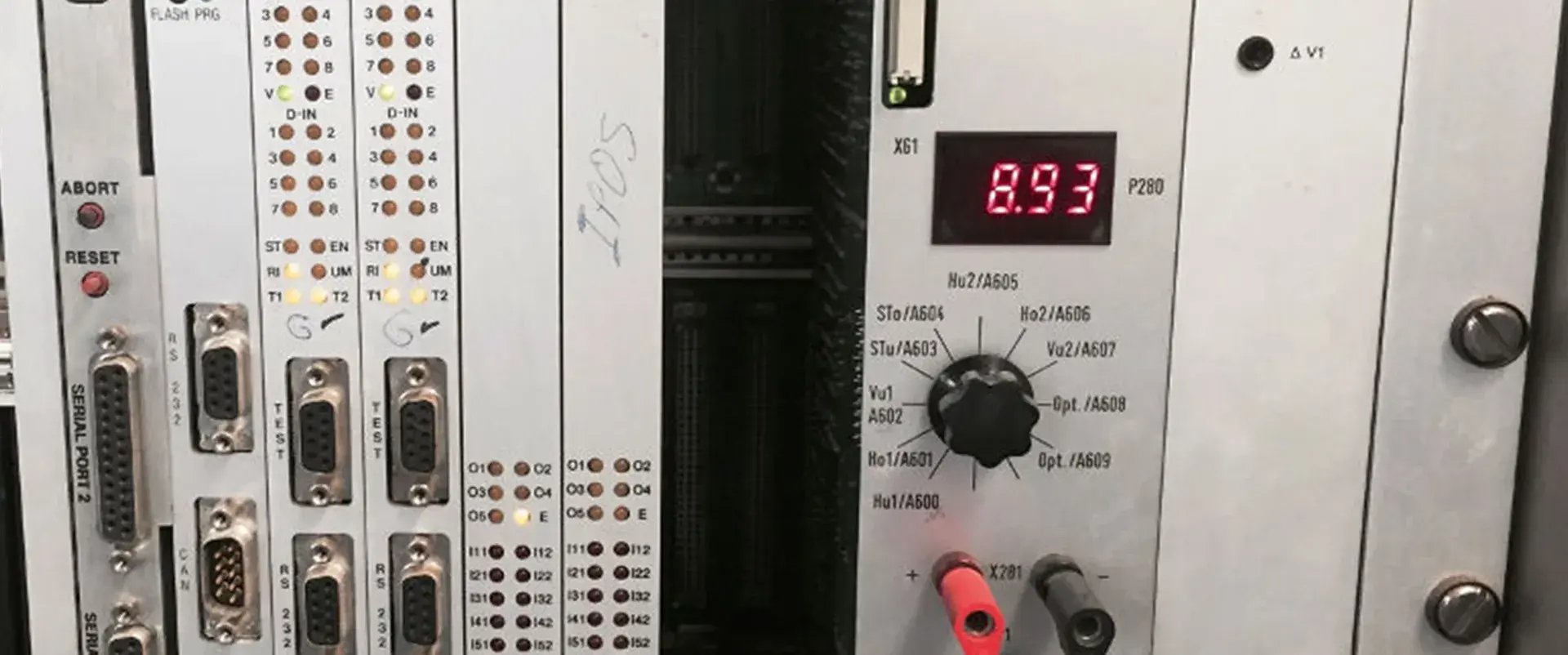
PMC has successfully upgraded a wide range of legacy control platforms, including:
PLC-5
SLC
VME
LabVIEW
This list continues to grow as we encounter new legacy systems in the field.
Modernization isn’t limited to control hardware and logic. PMC also specializes in upgrading the data and information systems that surround legacy control platforms.
This includes:
By identifying where data originates and how it’s used, PMC ensures modern replacements deliver equivalent—or improved—functionality without losing critical historical or operational context.


Control system modernization projects are planned and executed to reduce operational risk at every stage.
This includes:
Careful system analysis before changes are made
Parallel development and testing where possible
Validation of system behavior prior to commissioning
Thoughtful migration strategies that prioritize uptime
PMC’s goal is to modernize systems without introducing unnecessary disruption or uncertainty.
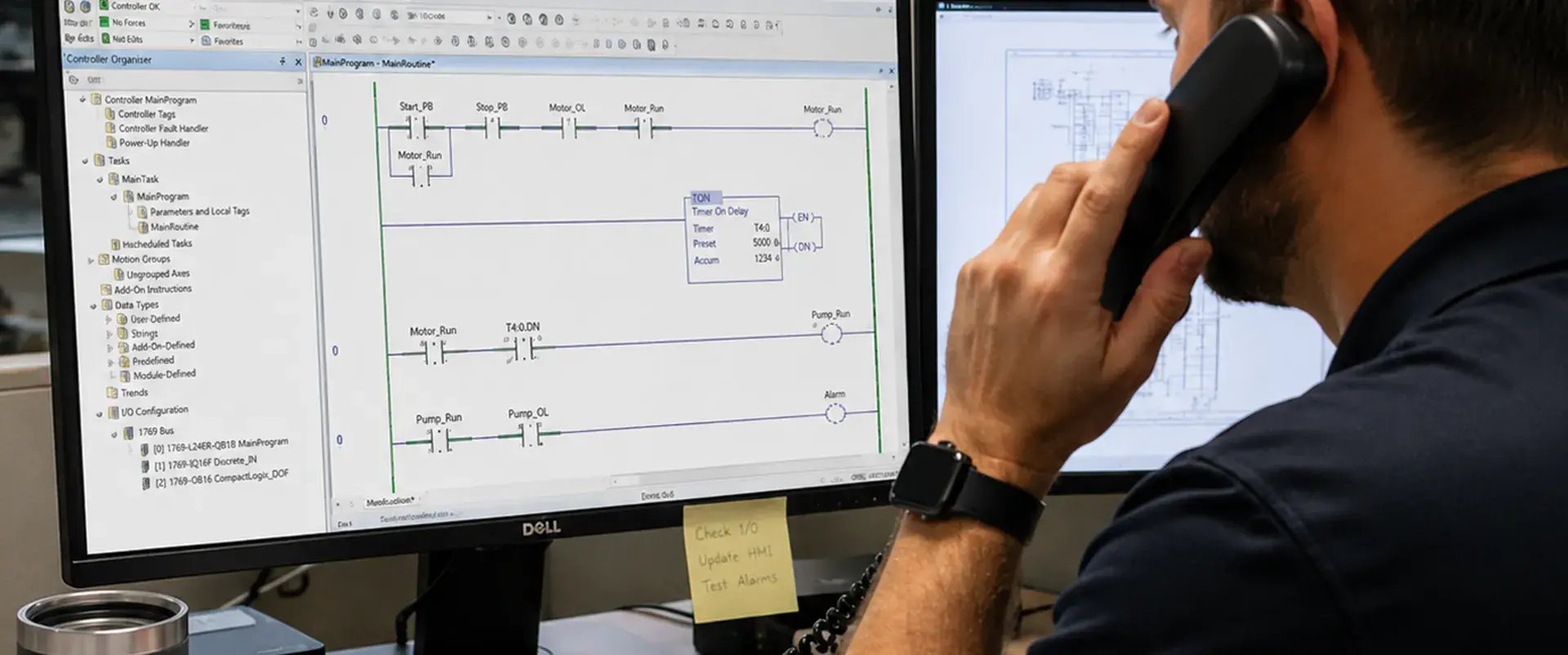
Once a system is modernized, PMC continues to support it throughout its lifecycle.
Support services include:
PMC stands behind modernized systems just as firmly as newly designed ones—ensuring long-term reliability and confidence.